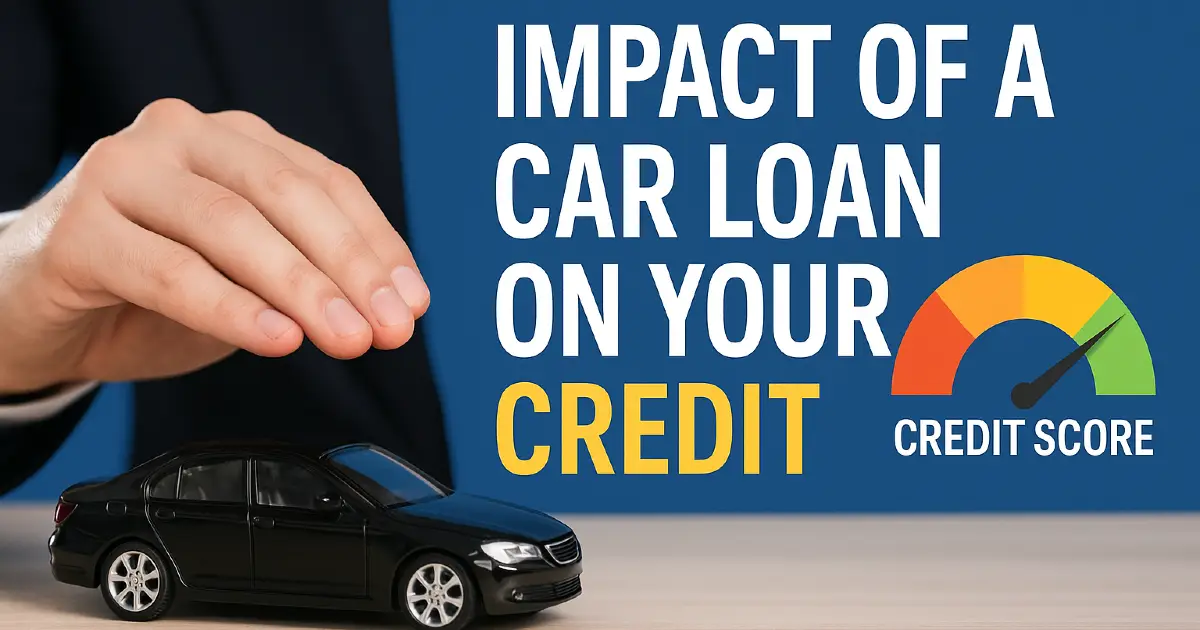
A car loan isn’t just a way to drive off with your dream vehicle — it’s also a powerful tool that can shape your credit profile. Whether you’re building credit from scratch or trying to improve your score, understanding how an auto loan affects your credit score is key.
In this article, we’ll break down the real impact of a car loan on your credit score — the good, the bad, and everything in between.
Taking a Car Loan Adds to Your Credit Mix
Credit score algorithms like variety. A good mix of credit types — such as credit cards, student loans, and installment loans like a car loan — shows that you can handle different financial responsibilities.
By adding an auto loan to your profile, you show lenders you can manage fixed monthly payments over time. That diversity can give your score a small but positive nudge.
Tip: If you’ve only had credit cards until now, a car loan could improve your credit mix and boost your score.
Loan Applications May Cause a Temporary Dip
When you apply for a car loan, the lender pulls your credit report — known as a hard inquiry. While this is a normal part of the loan process, it can cause a small, temporary drop in your credit score (typically around 5–10 points).
But don’t worry — as long as you’re not applying for multiple loans at once, your score should bounce back within a few months.
Pro Tip: If you’re rate-shopping, try to submit all applications within a 14-day window. Credit scoring models usually treat multiple inquiries in that time as just one.
On Time Payments Can Significantly Improve Your Score
Payment history is the biggest factor in your credit score. Every time you make your car loan payment on time, you’re sending a strong signal to lenders that you’re reliable.
Over the life of your loan, this consistent behavior can add dozens of points to your credit score.
Remember: Even one missed or late payment can do real damage. Set up auto-pay or reminders to stay on track.
Your Loan Affects Your Credit Age
The longer you have credit accounts in good standing, the better. A car loan, especially one you keep for several years, can help lengthen your credit history.
Just be aware that once you pay it off and the account is closed, it could eventually stop helping your “average age of credit.” However, the positive payment history will remain on your report for years.
Debt to Income and Credit Utilization Impact
While credit utilization mostly applies to credit cards, your total debt still plays a role in how lenders view you.
Taking on a large car loan increases your total outstanding debt. This might cause a slight dip in your score early on — especially if your income isn’t high relative to the loan amount. But as you pay it down, your score tends to improve.
Final Thoughts
A car loan can be a valuable credit-building tool — but only if you handle it responsibly. Make payments on time, don’t overextend yourself, and think of the loan not just as a way to get a car, but as a strategic step in building your financial reputation.